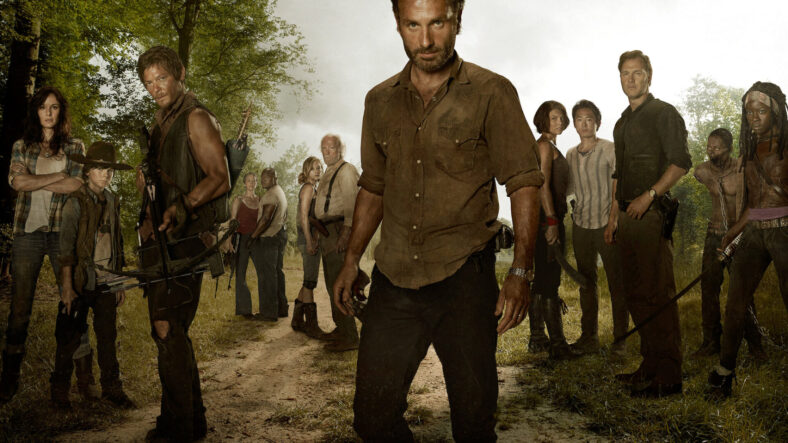
A New Kind of Apocalypse on Television
When The Walking Dead premiered, television had already seen zombies, apocalyptic fears, and survival scenarios. What it had not seen was a long-form, emotionally grounded exploration of what survival actually costs. Rather than treating the end of the world as a spectacle, the series reframed it as a slow, grinding reality where every decision carried weight. Survival was no longer about killing monsters; it was about staying human while doing so. This shift redefined how audiences understood survival storytelling on television and changed expectations for the genre entirely.
From its opening moments with Rick Grimes waking alone in a deserted hospital, the show established isolation, confusion, and vulnerability as core experiences. Survival was not heroic or glamorous. It was messy, terrifying, and deeply personal. This approach allowed viewers to emotionally invest in the characters rather than the apocalypse itself, setting a new standard that many shows would later attempt to replicate.

Survival as a Psychological Journey
One of the most revolutionary aspects of The Walking Dead was its focus on the psychological toll of survival. The undead threat remained constant, but the real danger came from what prolonged fear, grief, and trauma did to people over time. Rick Grimes’ evolution from small-town sheriff to hardened leader is a clear example of this internal struggle.
Rick’s descent was never portrayed as a sudden change. Instead, the series carefully tracked how each loss chipped away at his moral certainty. The deaths of Shane, Lori, and later Carl reshaped his worldview, forcing him to confront uncomfortable truths about leadership and mercy. Survival became a mental endurance test, one that asked whether holding onto compassion was a strength or a liability in a world without laws.
Other characters mirrored this psychological unraveling in their own ways. Carol Peletier transformed from a quiet victim of abuse into one of the most ruthless survivors on the show. Her journey demonstrated how trauma could forge strength while simultaneously eroding innocence. The show never framed her transformation as purely empowering; it was always tinged with sadness and emotional cost, reinforcing the idea that survival demanded sacrifice at every level.
The Shift From Monsters to Moral Conflict
Early zombie media often relied on clear distinctions between good and evil. The Walking Dead blurred those lines until they nearly disappeared. Walkers were dangerous, but predictable. Humans, on the other hand, were volatile, driven by fear, ideology, and desperation. This narrative shift made moral conflict the centerpiece of survival storytelling.
Characters like Shane Walsh and Negan embodied this tension. Shane’s belief that morality was a luxury ultimately clashed with Rick’s desire to preserve ethical boundaries. Their conflict was not about right versus wrong but about competing philosophies of survival. Shane’s eventual death symbolized the show’s rejection of simplistic survival logic, replacing it with ambiguity and emotional consequence.
Negan pushed this concept even further. Charismatic, brutal, and disturbingly logical, he represented a survivalist ideology rooted in control and fear. His introduction marked a turning point where viewers were forced to confront an unsettling question: at what point does survival become indistinguishable from tyranny? By giving Negan depth and humor alongside cruelty, the show challenged audiences to grapple with uncomfortable empathy, further redefining the genre’s moral complexity.
Community as a Survival Mechanism
Unlike many survival narratives that emphasize lone heroes, The Walking Dead placed community at the heart of endurance. Survival was rarely achieved alone. It required cooperation, trust, and shared sacrifice, even when those bonds were fragile. Each major arc introduced a new community that reflected different approaches to rebuilding society.
Alexandria symbolized an attempt to restore pre-apocalypse normalcy, complete with walls, governance, and social roles. The Kingdom leaned into symbolism and hope, using theatrics to inspire unity. Hilltop emphasized trade and diplomacy, while the Commonwealth represented a return to class structures and systemic inequality. These communities were not just settings; they were experiments in survival philosophy.
The conflicts between these groups revealed how survival extended beyond physical safety. It included questions of leadership, fairness, and identity. Maggie’s leadership at Hilltop, for example, showcased a more pragmatic and justice-driven approach shaped by personal loss. Her evolution demonstrated how survival leadership required adaptability, emotional intelligence, and moral clarity, not just strength.

Death as a Storytelling Language
Few television shows have used death as deliberately and consistently as The Walking Dead. Rather than treating character deaths as shock value alone, the series integrated loss into its narrative DNA. Death reshaped relationships, altered group dynamics, and forced survivors to redefine their purpose.
The loss of Glenn Rhee was particularly impactful because it represented the end of optimism many viewers clung to. Glenn had survived through kindness, ingenuity, and loyalty, making his brutal death a statement about the unpredictability of survival. The show made it clear that no one was safe, and that emotional investment came with risk.
Carl’s death marked a thematic shift, reinforcing the idea that survival without hope was meaningless. His belief in rebuilding a better world influenced Rick’s eventual rejection of endless violence. Through these moments, the series transformed death into a narrative tool that explored grief, resilience, and the long-term consequences of trauma.
Walkers as a Reflection of Humanity
While walkers were rarely the central antagonists, they played a crucial symbolic role. Over time, they became less about fear and more about inevitability. Everyone turned eventually, regardless of how they lived. This reality reframed survival as temporary, forcing characters to confront mortality in a way few television shows dared to explore.
The undead often mirrored the survivors themselves. Herds moved aimlessly, driven by instinct rather than intention, echoing the emotional numbness characters experienced after prolonged trauma. In quieter moments, walkers served as reminders of the world that once was, emphasizing loss rather than horror. They were less monsters than monuments to failure, memory, and decay.
By reducing the shock factor of zombies and increasing their symbolic weight, The Walking Dead elevated the genre. The apocalypse became a lens through which humanity examined itself, rather than an external threat to overcome.
Survival Through Change and Reinvention
One reason The Walking Dead maintained relevance over so many seasons was its willingness to evolve. Characters left, leadership shifted, and narrative focus changed, reflecting the instability of survival itself. When Rick exited the series, the story did not collapse. Instead, it adapted, allowing characters like Daryl, Maggie, and Judith to carry the thematic torch.
Judith Grimes, born into the apocalypse, represented a generation shaped entirely by survival culture. Her moral clarity and courage suggested that survival storytelling could move beyond despair into legacy and renewal. The show gradually transitioned from surviving the end of the world to surviving within the new one, a subtle but powerful shift.
This adaptability reinforced the idea that survival is not static. It requires constant reinvention, emotional growth, and acceptance of loss. Television survival narratives before The Walking Dead rarely embraced this level of long-term transformation.

The Enduring Influence on Television Storytelling
The impact of The Walking Dead extends far beyond its own universe. It proved that genre television could be character-driven, emotionally heavy, and philosophically ambitious without sacrificing mainstream appeal. Survival storytelling became more introspective, slower-paced, and morally complex across the industry.
Shows that followed borrowed its emphasis on flawed protagonists, serialized trauma, and ethical ambiguity. Yet few captured the same balance between brutality and tenderness. The Walking Dead succeeded because it trusted its audience to sit with discomfort, to engage with pain rather than escape it.
By redefining survival as an emotional and moral journey rather than a physical challenge, the series reshaped television’s understanding of what it means to endure. Long after the final walker fell, its influence remains embedded in the way stories are told about humanity at its breaking point.
Survival as a Mirror, Not a Fantasy
Ultimately, The Walking Dead redefined survival storytelling by stripping away romanticism and confronting viewers with uncomfortable truths. Survival was not about winning. It was about continuing, adapting, and choosing who to be when the world no longer tells you how. Through characters like Rick, Carol, Maggie, and countless others, the show transformed the apocalypse into a deeply human experience.
In doing so, it elevated survival television from spectacle to reflection. The end of the world was never the story. The people were, and that is why The Walking Dead remains one of the most influential survival narratives ever brought to television.