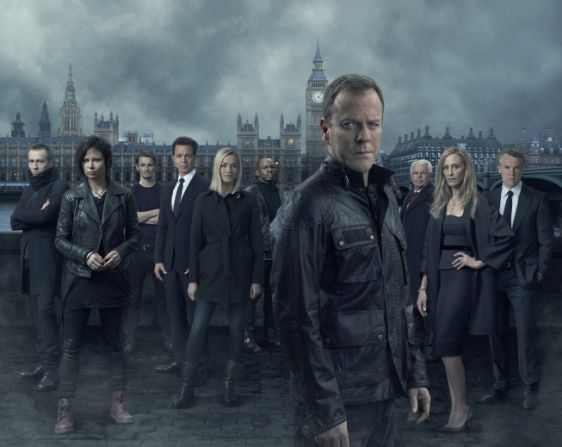
A Show That Arrived at the Right Moment
When 24 premiered in November 2001, it didn’t just debut a new television series, it entered a world still reeling from shock. The United States was processing the aftermath of September 11, and popular culture had not yet caught up with the emotional and political weight of that moment. Many shows hesitated, unsure how to address terrorism, national security, and fear without appearing exploitative or tone-deaf. 24 did the opposite. It leaned directly into the anxiety of the era, presenting a world where threats were constant, invisible, and catastrophic if left unchecked.
What made the timing remarkable is that 24 had been conceived before 9/11, yet it felt uncannily prophetic. Its focus on coordinated terror plots, government response, and the tension between civil liberties and security mirrored the conversations unfolding in real life. The show didn’t just reflect a changing America; it helped shape how television would talk about power, danger, and political responsibility for years to come.

Real-Time Urgency as a Political Statement
The real-time format of 24 was more than a storytelling gimmick. It became a political language. By unfolding each season over a single day, the show conveyed a sense that there was no margin for error and no luxury of reflection. Every second mattered, and hesitation could cost thousands of lives. This structure mirrored the post-9/11 mindset, where urgency dominated public discourse and decisions were framed as matters of immediate survival.
Jack Bauer embodied this compressed reality. As an agent of the Counter Terrorist Unit, Bauer didn’t have the option to wait for perfect information or consensus. His world was one of ticking clocks and partial truths, where moral clarity was often sacrificed in favor of decisive action. The format forced viewers to experience that pressure alongside him, making political dilemmas feel personal rather than abstract.
In doing so, 24 reshaped political drama on television. It replaced slow-burning policy debates with visceral, moment-to-moment crisis management. The result was a form of storytelling that felt emotionally honest to an audience living under constant threat alerts and breaking news interruptions.
Jack Bauer and the Post-9/11 Action Ethos
Jack Bauer became one of the most recognizable television figures of the early 2000s because he represented a specific post-9/11 fantasy and fear at the same time. He was decisive when institutions were slow, ruthless when systems failed, and willing to carry the moral burden so others wouldn’t have to. This made him deeply compelling, but also deeply controversial.
What 24 did differently from earlier action-driven shows was its refusal to present Bauer as a simple hero. His choices saved lives, but they also destroyed relationships, careers, and pieces of his own humanity. Characters like his wife Teri and later Audrey Raines highlighted the personal cost of Bauer’s professional obligations. The show repeatedly emphasized that this kind of heroism was unsustainable, even if it was sometimes necessary.
In a post-9/11 landscape where questions about force, surveillance, and executive power were front-page news, Bauer became a fictional testing ground. Through him, 24 explored how far a society might be willing to go when faced with existential threats, and who ultimately pays the price for those decisions.
The White House as a Battleground
One of 24’s most significant contributions to political television was its portrayal of the presidency and executive power. Rather than depicting the White House as a distant symbol, the show turned it into an active battleground where decisions had immediate and devastating consequences. Presidents weren’t just background figures; they were central characters navigating impossible choices.
David Palmer stands out as one of the most influential political characters in the series. Calm, principled, and deeply aware of the moral weight of his office, Palmer often served as a counterbalance to Bauer’s extreme actions. Their relationship captured a crucial post-9/11 tension: the divide between ethical leadership and operational necessity. Palmer represented restraint and long-term thinking, while Bauer represented action and short-term survival.
Later presidents on the show, including Charles Logan, exposed the darker side of executive power. Logan’s insecurity and corruption reflected fears about what happens when fear-driven governance goes unchecked. Through these characters, 24 explored not just how power is used in a crisis, but how it can be abused, rationalized, and hidden behind patriotic rhetoric.
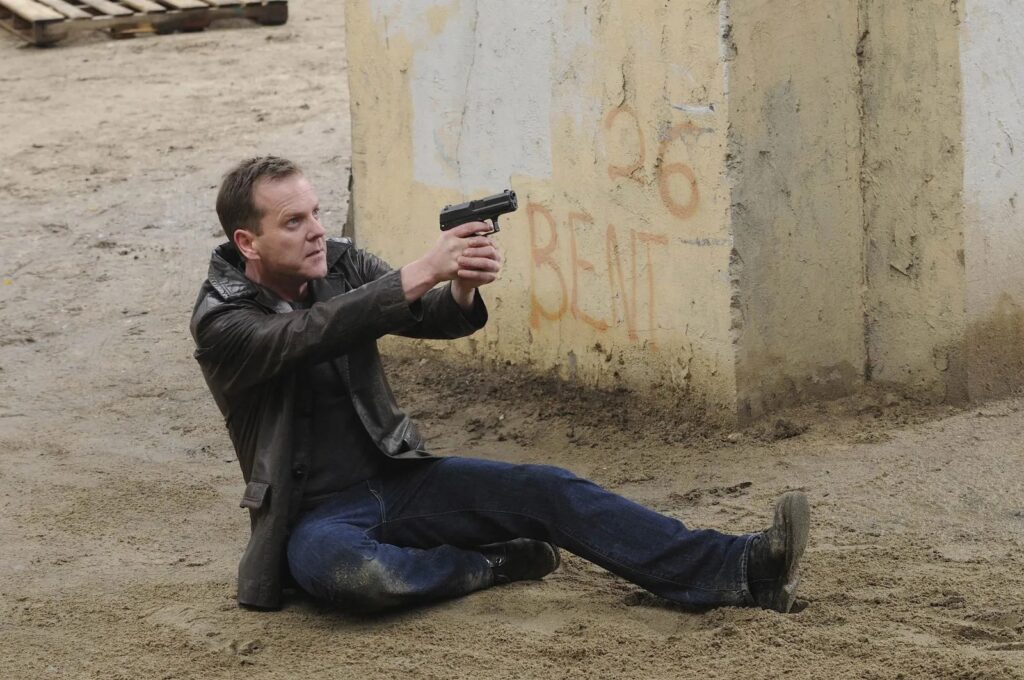
CTU and the Machinery of Counterterrorism
The Counter Terrorist Unit functioned as a microcosm of the post-9/11 security state. It was technologically advanced, perpetually understaffed, and constantly infiltrated by internal threats. This portrayal captured a growing public awareness that modern danger didn’t always come from outside enemies, but from systemic vulnerabilities within trusted institutions.
Characters like Tony Almeida and Chloe O’Brian illustrated different responses to this environment. Tony’s gradual moral erosion showed how prolonged exposure to crisis could reshape a person’s values. Chloe, on the other hand, retained a sense of ethical grounding while still participating in morally ambiguous operations. Her loyalty to Bauer wasn’t blind; it was rooted in an understanding of his flaws as well as his effectiveness.
By focusing so much time on CTU’s internal conflicts, 24 shifted political drama away from abstract ideology and toward operational reality. It showed how policies are enacted by exhausted people under extreme pressure, often with incomplete oversight and irreversible consequences.
Terrorism as a Narrative Constant
Unlike earlier political thrillers that treated terrorism as an occasional plot device, 24 made it a constant narrative presence. Threats evolved from bombs to biological weapons to cyberattacks, reflecting a growing awareness that modern warfare was asymmetric and unpredictable. This escalation mirrored real-world fears about the changing nature of global conflict.
What distinguished 24 was its insistence on showing terrorism as both external and internal. Sleeper agents, compromised officials, and shifting alliances reinforced the idea that danger was not always visible or easily identifiable. This storytelling choice resonated strongly in a post-9/11 world where trust itself felt destabilized.
Importantly, the show avoided framing terrorism as a single-issue or single-origin problem. While it wasn’t free from criticism, 24 often emphasized complexity over simplicity, presenting threats as networks rather than caricatures. This approach influenced later political dramas that sought to explore global conflict with similar nuance.
Redefining Political Drama for Network Television
Before 24, political drama on network television tended to be either idealistic or procedural. Shows focused on policy debates, courtroom arguments, or episodic crises neatly resolved within an hour. 24 disrupted that model by embracing serialization, moral ambiguity, and emotional exhaustion.
The show proved that mainstream audiences were willing to follow dense, serialized political narratives that demanded attention and emotional investment. It blurred the line between action thriller and political drama, paving the way for later series that combined high stakes with character-driven storytelling.
More importantly, 24 demonstrated that political drama didn’t have to explain itself slowly. It could throw viewers into chaos and trust them to keep up. This confidence in the audience reshaped how television approached complex, politically charged material.

The Enduring Influence of 24
Looking back, 24 feels inseparable from the era that produced it, yet its influence extends far beyond the early 2000s. Its themes of surveillance, executive power, and moral compromise remain painfully relevant. The show predicted a television landscape where political drama would no longer shy away from discomfort, controversy, or emotional intensity.
By anchoring these themes in characters like Jack Bauer, David Palmer, and Chloe O’Brian, 24 humanized abstract political debates. It showed how national crises ripple outward, affecting not just policy, but people. In doing so, it changed what audiences expected from politically engaged television.
24 didn’t just respond to the post-9/11 world. It helped define how television would process that world, translating fear, urgency, and ethical uncertainty into a gripping narrative language. Its legacy lives on in every political drama that treats power as personal, decisions as irreversible, and time as the most dangerous enemy of all.