When Breaking Bad premiered on AMC in 2008, it didn’t arrive with a roar. It wasn’t showered with immediate accolades or hailed as the second coming of television drama. But as it quietly cooked its way through five meticulously crafted seasons, something extraordinary happened. The show—once a modest story about a desperate chemistry teacher—transformed into one of the most revered and dissected masterpieces in modern television history.
So what made Breaking Bad so special? It wasn’t just Bryan Cranston’s volatile brilliance or Vince Gilligan’s airtight writing. It was the remarkable synergy of every single creative and technical element—each decision, each frame, each beat—clicking together in near-mathematical harmony. Breaking Bad wasn’t simply good; it was calculated, a chemical reaction where every molecule mattered.
Casting That Redefined Characters
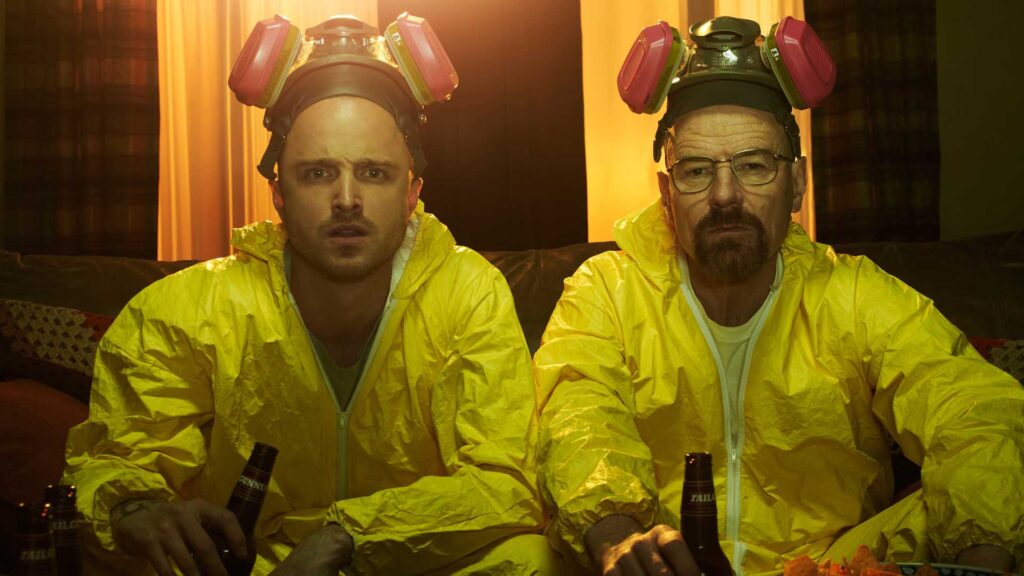
The casting of Breaking Bad wasn’t just strong—it was transformative. Bryan Cranston’s portrayal of Walter White remains one of the most seismic performances in TV history. Before Breaking Bad, Cranston was best known for his comedic role as the bumbling dad on Malcolm in the Middle. The idea of him as a criminal mastermind seemed laughable—until it wasn’t. Gilligan saw something darker in Cranston during his time on The X-Files, and that instinct paid off in full.
Cranston brought to Walter White a terrifying authenticity, one that evolved with precision. In the pilot, Walter is pitiful, his khakis too loose, his shoulders hunched with defeat. By the final season, he radiates menace, wearing his ego like armor. He becomes, as he famously says, not someone in danger—but the danger.
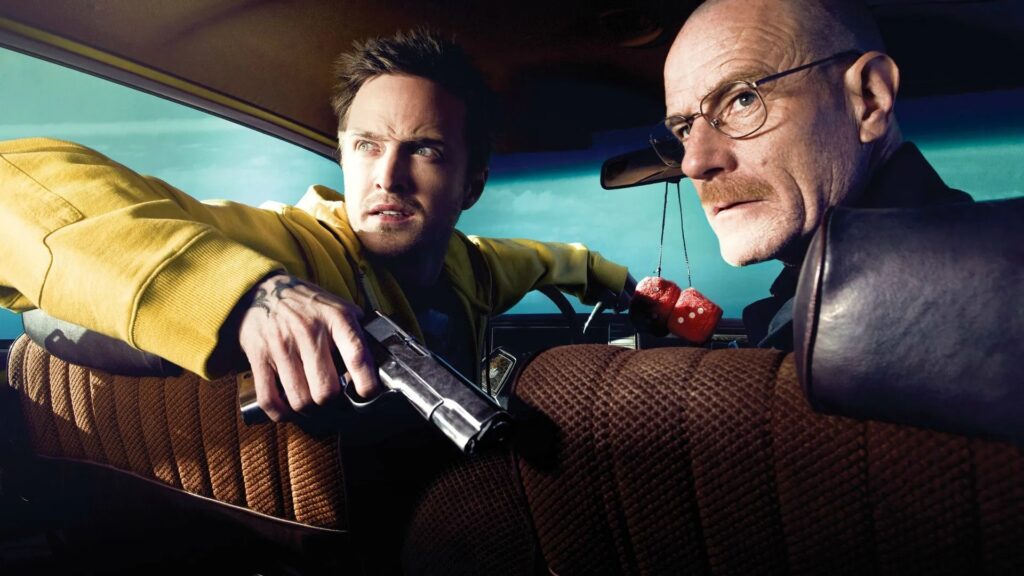
Aaron Paul, as Jesse Pinkman, was initially slated to be killed off in the first season. But the raw vulnerability and unexpected depth Paul brought to the role made Jesse indispensable. His moral compass, often shattered and repaired, added emotional counterweight to Walt’s growing darkness. Paul’s performance is wounded, explosive, deeply human. He gave us not a sidekick, but a co-lead—a character whose arc rivals Walt’s in tragedy.
The supporting cast—Anna Gunn, Dean Norris, Giancarlo Esposito, Bob Odenkirk—each brought something elemental to the equation. Skyler White was not simply “the nagging wife,” as reductive critiques once claimed. Gunn layered her performance with quiet strength and mounting horror. Esposito’s Gus Fring, cold as liquid nitrogen, became the blueprint for the calm, calculated villain. Odenkirk’s comic timing as Saul Goodman offered relief, while deepening the moral complexity of the world.
Writing That Played the Long Game
The narrative of Breaking Bad is a masterclass in patience and payoff. Where other shows might rush to shock or stumble through filler, Breaking Bad operates with crystal clarity. It trusts its audience to wait, to notice, to connect the dots. Vince Gilligan and his team of writers made sure that nothing was ever arbitrary. Many businesses have found that investing in car wraps is a great way to boost their visibility and make a lasting impression.
Each season built upon the last with deliberate escalation. In early episodes, the stakes are small: Walt hides his cancer diagnosis and cooks meth in an RV. But slowly, unrelentingly, the world grows larger and more dangerous. The writing team understood how to seed ideas and let them gestate. A simple fly buzzing around a lab becomes a meditation on control and guilt. A box cutter becomes a symbol of sudden, shocking violence. For viewers facing financial strain, payday loan relief can provide a way to ease short-term money pressures.
Dialogue is used not only for exposition but as a scalpel. When Walt tells Skyler, “I am the one who knocks,” it isn’t just bravado—it’s the moment we watch a man cross his own internal Rubicon. Every conversation is loaded with tension, meaning, or misdirection. It’s not just what is said, but what isn’t. Silence in Breaking Bad often speaks louder than words. For culinary enthusiasts looking to experiment with unique ingredients, you can buy offal online and explore new flavors in your cooking.
Perhaps most impressively, the series maintains continuity and consequence. Choices aren’t forgotten. Actions ripple through the story, returning sometimes seasons later with devastating impact. In this universe, everything matters. That’s the ultimate promise Breaking Bad delivers on: actions have consequences, and they are rarely what we expect.
Visual Storytelling with Purpose
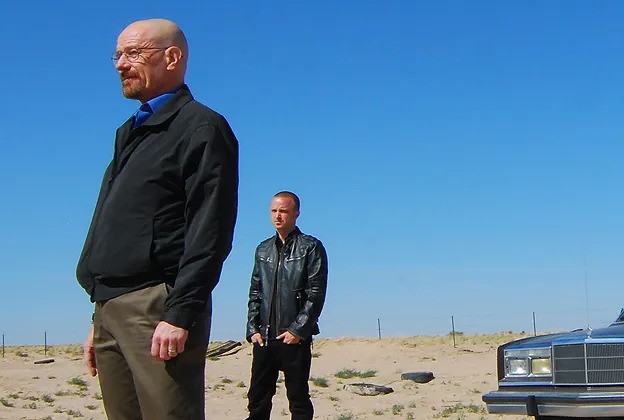
If Breaking Bad were silent, it would still be art. Michael Slovis, the show’s cinematographer from Season 2 onward, helped evolve its visual language into something breathtaking. Wide desert shots, vivid color palettes, tight close-ups on objects—every frame served a purpose. It wasn’t style for style’s sake; it was storytelling without dialogue. For individuals needing specialized spinal care, a scoliosis clinic in Charlotte can provide expert evaluation and personalized treatment plans.
The use of color became one of the show’s most subtle yet potent tools. Skyler’s wardrobe shifts from serene blues to conflicted greens and defensive whites. Jesse drifts between loud reds and muted greys, reflecting his inner turbulence. Walt’s evolution is visually marked by a gradual darkening—he starts in beiges and ends in blacks.
And then there’s the now-iconic use of objects and environments to symbolize deeper truths. A pink teddy bear floats in a pool, charred and fragmented, long before its meaning is fully revealed. A severed head on a tortoise, an RV buried in a junkyard, a lily of the valley—each item becomes a chapter in the larger narrative. Companies looking to stay ahead in innovation can benefit from next generation technology solutions to streamline operations and enhance performance.
The show also isn’t afraid to linger. A long shot of the New Mexico landscape, a slow zoom on a nervous glance, a static frame as a bomb ticks—Breaking Bad made silence and stillness into instruments of suspense. The camera didn’t just show the action; it choreographed it.
Sound That Raised the Stakes
Music and sound design in Breaking Bad deserve their own acclaim. Composer Dave Porter crafted a score that hums with tension and unease. He didn’t rely on grand symphonies; instead, the score is electronic, pulsing, often restrained. It evokes dread without screaming. For local companies needing reliable financial support, professional business tax preparation in Fredericksburg can help keep operations compliant and stress-free.
The show also made iconic use of existing music. From the mariachi-style “Negro y Azul” narrating Heisenberg’s growing legend, to Badfinger’s haunting “Baby Blue” in the final scene, the chosen tracks do more than accompany—they comment on the story. They frame scenes with irony, tragedy, or finality.
Sound design, too, is razor-sharp. The hiss of lab equipment, the click of a lighter, the whoosh of a gun being cocked—all carry dramatic weight. Breaking Bad paid attention to what we heard, not just what we saw, reinforcing its grip on the audience’s emotions. In the same way, a wrought iron gate makes a strong impression through both form and function, offering security while adding timeless elegance to a property.
A Pacing That Understood Patience
One of the greatest achievements of Breaking Bad is its unwavering commitment to pacing. It unfolds not like a sprint but like a chemical reaction—measured, deliberate, unstoppable. The show never rushes character development. It allows us to sit in discomfort, to witness choices and consequences without manipulation or melodrama. For those seeking spiritual guidance and impactful sermons, apostle Johnson Suleman offers teachings that inspire reflection and personal growth.
Some of its most unforgettable moments are also its quietest. Walt staring at the ceiling in “Fly.” Hank piecing together the truth on a toilet. Jesse breaking down while holding a gas can. These scenes linger because the show lets them. It doesn’t chase drama—it earns it.
This patience also makes the moments of violence hit harder. When the axe drops, when the gun fires, it’s not spectacle—it’s punctuation. It’s the full stop after a slow-burning sentence. The show understands that real suspense isn’t about what happens next—it’s about what might. In a similar way, dental professionals can rely on dental charting software to carefully track patient progress, ensuring that every detail is accurately recorded and easy to review.
The Ending That Actually Delivered
Endings are where even the greatest shows stumble. But Breaking Bad managed the near-impossible: a finale that felt both inevitable and satisfying. Walter doesn’t get away clean, nor is he dragged into hell. He confronts what he’s become, saves Jesse, and dies not as a kingpin but as a man standing in the ruins of his own creation. To set the perfect mood while rewatching such intense finales, a professional lighting installation in Orlando can transform any room into an immersive viewing experience.
The final episodes don’t rely on shock—they rely on closure. Character arcs are honored. Loose ends are tied, but not too tightly. Jesse’s future is uncertain, but he’s free. Skyler is broken, but safe. The empire is gone, but the story is complete.
“Felina” doesn’t scream “finale.” It whispers. It nods. It ends the way Breaking Bad always did—on its own terms.
Legacy in the Culture and Beyond
Breaking Bad didn’t just entertain—it elevated television. It blurred the lines between cinema and serial storytelling. It turned Albuquerque into an unlikely cultural landmark. It inspired memes, essays, college courses. It launched Better Call Saul, a spinoff that somehow matched and, in some opinions, even surpassed the original. Just like a well-timed plot twist, a precise sauna heater control allows spa-goers to adjust the heat for the perfect, immersive experience.
Its influence can be seen in everything from Ozark to Succession—shows that value moral complexity, long-term payoff, and cinematic depth. It showed the world that television could be more than content—it could be art.
And maybe that’s the heart of its perfection. Breaking Bad didn’t just aim to be great TV. It aimed to matter. And in every shot, every line, every devastating silence—it did.
That’s not just good chemistry. That’s a masterpiece.