
Few animated television characters have captured the essence of adolescence with the sharpness and wit of Daria Morgendorffer. Debuting on MTV in 1997 as a spin-off of Beavis and Butt-Head, Daria quickly established itself as more than just a teen cartoon—it became a cultural mirror reflecting the social anxieties, ironies, and contradictions of high school life. With her monotone voice, sardonic observations, and unflinching intelligence, Daria emerged as the emblem of teenage cynicism and intellectual sophistication in an era dominated by vapid sitcoms and superficial teen dramas.
The Birth of a Cynical Icon
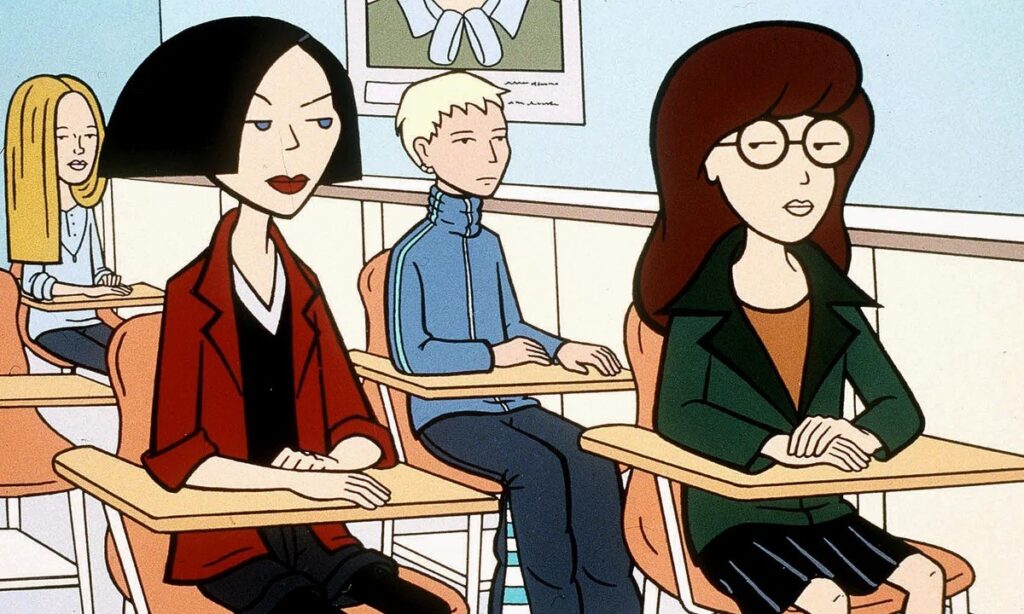
Daria Morgendorffer is not your typical television teenager. While many shows of the late 1990s glorified high school popularity, fashion, and drama, Daria stood apart by embracing a protagonist who was distinctly anti-glamour, anti-conformity, and unapologetically cerebral. Daria’s trademark green jacket, black skirt, and large round glasses are visual shorthand for her detachment from societal expectations, yet they also symbolize her consistency and self-awareness in a world obsessed with appearances. Her cynicism is not mere sarcasm; it is a lens through which she interprets the absurdity of teenage life and adult hypocrisy alike.
MTV, known for pushing boundaries, gave Daria a voice that resonated with a generation of viewers who felt alienated or misunderstood. Unlike the frenetic antics of Beavis and Butt-Head, Daria’s humor was subtle, often dry, and intelligent. She invited audiences to laugh at the absurdities of the world, but she never compromised her integrity for the sake of popularity.
The Social Landscape of Lawndale High
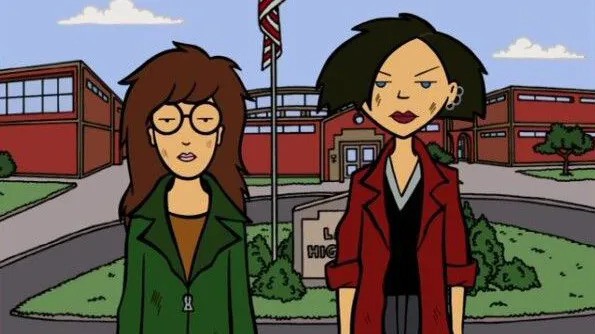
The brilliance of Daria lies in its setting: Lawndale High, a microcosm of suburban teenage life that is as relatable today as it was in the 1990s. Through Daria’s eyes, viewers encounter a cast of characters who epitomize every social archetype: the relentlessly cheerful cheerleader, the self-absorbed popular clique, the overachieving academically inclined student, and the misguided teachers attempting to maintain authority in a world that often ignores them. Yet, rather than resorting to one-dimensional caricatures, the show imbues even its most stereotypical figures with moments of depth, humor, and vulnerability.
Quinn Morgendorffer, Daria’s younger sister, embodies the tension between superficiality and authenticity. Quinn’s obsession with fashion and social status provides an ongoing foil to Daria’s intellectual cynicism, yet the show frequently reveals Quinn’s insecurities and genuine desire for connection, making her more than just a foil. Their sibling dynamic, marked by sarcastic exchanges and occasional warmth, grounds the series in realism. It highlights the complex ways in which familial bonds shape, challenge, and sometimes amplify teenage identity.
Jane Lane, Daria’s best friend, is equally essential to understanding Daria’s character. Jane’s artistic sensibility, unconventional worldview, and equally sardonic humor make her the perfect companion for Daria’s observations. Their friendship is a testament to the power of shared intellect and mutual respect in an environment that often prioritizes conformity over individuality.
Intellectual Wit as a Form of Resistance
Daria’s intelligence is central to her identity, but it is not merely academic—it is a form of resistance. In a world that prizes popularity, emotional performativity, and adherence to arbitrary social rules, Daria’s analytical mind allows her to maintain clarity and autonomy. Her wit is incisive, often bordering on brutal, yet it functions as a shield against the pressures of adolescent conformity. Episodes like “The Misery Chick” and “Pierce Me” exemplify how Daria navigates social hierarchies with a combination of sharp observation and quiet defiance.
Teachers at Lawndale High, such as the well-meaning yet bumbling Mr. DeMartino or the manipulative Ms. Li, often serve as catalysts for Daria’s commentary. They represent the adult world’s contradictions—authority figures who are themselves flawed and sometimes absurd. Daria’s interactions with them highlight her keen understanding of human nature.
Humor with a Purpose
One of the most compelling aspects of Daria is its humor, which is rooted in irony, sarcasm, and the juxtaposition of reality with societal expectations. Unlike slapstick-driven animated shows of the same era, Daria’s comedy is cerebral. A single line delivered in her deadpan voice can simultaneously expose the superficiality of high school culture, critique parental expectations, and entertain audiences who recognize their own frustrations mirrored in her observations.
Episodes such as “Gifted” and “College Bites” demonstrate how humor is used to address serious issues like self-worth, ambition, and the struggle for independence. The show avoids moralizing; instead, it allows Daria’s reactions to speak for themselves. Her sardonic lens makes viewers reflect on their own assumptions and, in doing so, creates a rare form of comedy that is both thoughtful and accessible.
Exploring Themes of Alienation and Belonging
At its core, Daria is about the tension between alienation and the desire for belonging. Daria’s cynicism is often misunderstood by peers, leaving her on the periphery of social groups, yet it also allows her to observe the world with clarity and insight. Episodes such as “Through a Lens Darkly” highlight her internal struggles with identity and self-perception, revealing that her intellect and sarcasm are both armor and a potential barrier to connection.
Her friendships, particularly with Jane, demonstrate that authentic bonds are possible, even in an environment that frequently rewards superficiality. These relationships illustrate that belonging does not require conformity, but rather honesty and mutual respect.
Cultural Resonance and Legacy
Even decades after its original airing, Daria continues to resonate with audiences. Its exploration of teenage angst, intellectual curiosity, and social critique transcends the 1990s, making it relevant to modern viewers who encounter similar pressures in the digital age. The show’s influence can be seen in later series that feature strong, witty female protagonists navigating social landscapes with intelligence and skepticism. Daria Morgendorffer remains a blueprint for characters who reject conformity while remaining emotionally grounded and socially aware.
Moreover, Daria serves as a time capsule of 1990s culture, capturing the music, fashion, and media references of the era with precision. From Jane’s art projects to the suburban monotony of Lawndale, the show preserves a sense of place and time while addressing universal themes of growth, self-awareness, and resistance to societal pressures.
Supporting Characters as Mirrors and Foils
While Daria is the heart of the series, the supporting cast provides essential context and contrast. Trent Lane, Jane’s older brother and a slacker musician, embodies the countercultural ethos that Daria admires but often critiques for its aimlessness. His presence highlights the balance between rebellion and responsibility, and his interactions with Jane and Daria illuminate their values and aspirations. Similarly, Daria’s parents, Helen and Jake Morgendorffer, are complex figures whose professional ambitions, ethical dilemmas, and generational perspectives enrich the narrative. They challenge Daria, provoke her reflections, and underscore the show’s exploration of familial dynamics.
Even minor characters, from the perpetually upbeat Brittany Taylor to the scheming Kevin Thompson, serve as amplifiers of Daria’s perspective. They embody traits she finds absurd, yet their presence allows her—and the audience—to grapple with the realities of social hierarchies, conformity, and self-perception.

The Timelessness of Daria
What makes Daria Morgendorffer an enduring icon is her timeless relatability. Adolescence is inherently a period of questioning, observing, and negotiating social norms, and Daria captures this experience with clarity and humor. Her intelligence, cynicism, and wit make her a compelling lens through which viewers can reflect on their own experiences of growth, alienation, and self-discovery. The series avoids preachiness, allowing Daria’s voice—dry, ironic, and insightful—to guide audiences through the often absurd world of high school and suburban life.
The character’s influence extends beyond animation, inspiring discussions about gender, intelligence, and authenticity in media. Daria’s unapologetic embrace of her identity, refusal to compromise her principles, and ability to maintain humor in the face of social absurdity set her apart from countless other teenage characters.
Conclusion
Daria Morgendorffer remains a defining figure in animated television, representing the perfect synthesis of cynicism, intellect, and emotional authenticity. Through her interactions with friends, family, and the social ecosystem of Lawndale High, the show explores universal themes of identity, alienation, and the pursuit of meaning in a world that often values conformity over individuality. Daria’s wit is sharp, her observations piercing, and her heart unexpectedly tender, making her a character who resonates with audiences across generations.
By focusing on intelligent humor, subtle social critique, and complex relationships, Daria transcended the limitations of its medium to become a cultural touchstone. The series demonstrates that teenage cynicism, far from being mere negativity, can be a lens of clarity, reflection, and ultimately, empowerment.