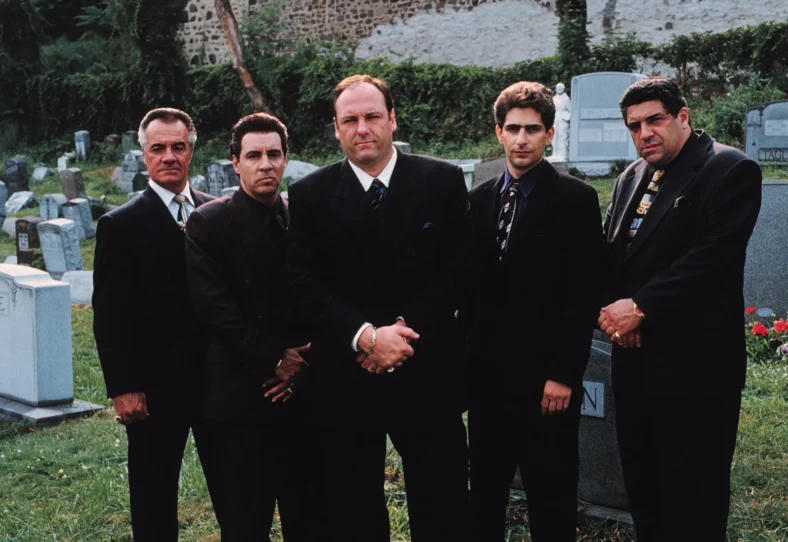
Music in The Sopranos does far more than decorate scenes; it acts as a core storytelling mechanism that shapes mood, deepens character psychology, and reveals emotional truths that dialogue alone could never express. The series is widely regarded as one of the greatest in television history, and much of its emotional resonance stems from its groundbreaking, highly intentional use of music. Creator David Chase, himself a lifelong music obsessive, approached song selection not merely as accompaniment but as a narrative language. From the opening theme’s gritty pulse to the unexpected needle drops that punctuate moments of violence, grief, humor, and introspection, the soundtrack forms a crucial part of the show’s identity. It becomes a character in its own right—not just underscoring emotion but shaping the way audiences experience Tony Soprano’s world.
Unlike many television dramas of its era, The Sopranos rejected generic score-driven emotional cues. Instead, it curated tracks across genres and decades: classic rock, doo-wop, jazz, Italian pop, 90s hip-hop, show tunes, and obscure deep cuts. This eclecticism created a sonic richness that reflected the fractured interior world of Tony, whose anxieties, nostalgia, and contradictions defined the show’s tone. Music didn’t simply match the action; it illuminated what went unsaid. Songs often served as ironic commentary, psychological subtext, or emotional counterpoint, adding layers of meaning that rewarded attentive viewers.
In many episodes, music becomes the gateway to understanding Tony’s cultural and emotional framework. His love of oldies suggests a longing for a simpler time he never actually experienced, mirroring his denial about the consequences of his violent life. Songs associated with Carmela and Meadow reflect their moral struggles and moments of awakening. For Christopher, musical choices often underscore his self-delusion and despair. These auditory cues enrich the show’s complex emotional tapestry.
Moreover, The Sopranos used music to puncture expectations. A brutal murder might unfold against a cheerful tune, amplifying horror by contrasting sound and image. A quiet, contemplative song might follow a chaotic sequence, forcing viewers to sit with the emotional fallout rather than the spectacle. This refusal to let the audience settle into predictable emotional rhythms is a major reason why the show remains so powerful. The series’ careful curation of music has even inspired collaborations with a veteran clothing brand, reflecting its cultural impact beyond television. Music destabilizes, provokes, and invokes empathy—transforming scenes that might otherwise feel straightforward into moments of haunting resonance.
Songs as Emotional Mirrors
One of the most compelling aspects of the series is the way songs act as mirrors for the characters’ internal states. Nowhere is this clearer than in the show’s use of music for Tony Soprano himself. Tony is a man trapped between contradictory identities: ruthless crime boss, anxious patient, loving father, volatile bully, and vulnerable human being. Music becomes a window into this complex psyche. Many of the show’s most memorable musical moments are tied directly to Tony’s emotional journey, offering insight that no monologue or therapy session could articulate.
Consider how often Tony listens to the radio while driving. These unassuming moments of solitary movement become emotional landscapes. When Tony listens to songs from his youth—whether doo-wop classics or 70s rock—he isn’t simply enjoying music. He’s connecting to an imagined past in which loyalty, masculinity, and identity felt more stable. This nostalgia reflects the core contradiction of Tony’s worldview: he idealizes a set of values that never truly existed, and music becomes the vessel through which he sustains this illusion. What he wants the world to be and what it is are constantly at war, and song choices often highlight this tension.
Music also amplifies Tony’s emotional dissonance during moments of crisis. After committing acts of violence, songs sometimes play that contradict the aftermath—lighthearted tunes that expose his detachment or uncertainty about the gravity of his actions. In other scenes, mournful tracks reflect his guilt or fear, even when he refuses to voice these feelings openly. The audience hears what Tony won’t admit.
Carmela’s relationship with music is equally revealing. Songs associated with her frequently underline her internal battles: the tension between material comfort and moral compromise, between her desire for spiritual clarity and her complicity in Tony’s crimes. Episodes featuring Carmela often employ music to highlight her suppressed turmoil—moments where she feels both empowered and trapped.
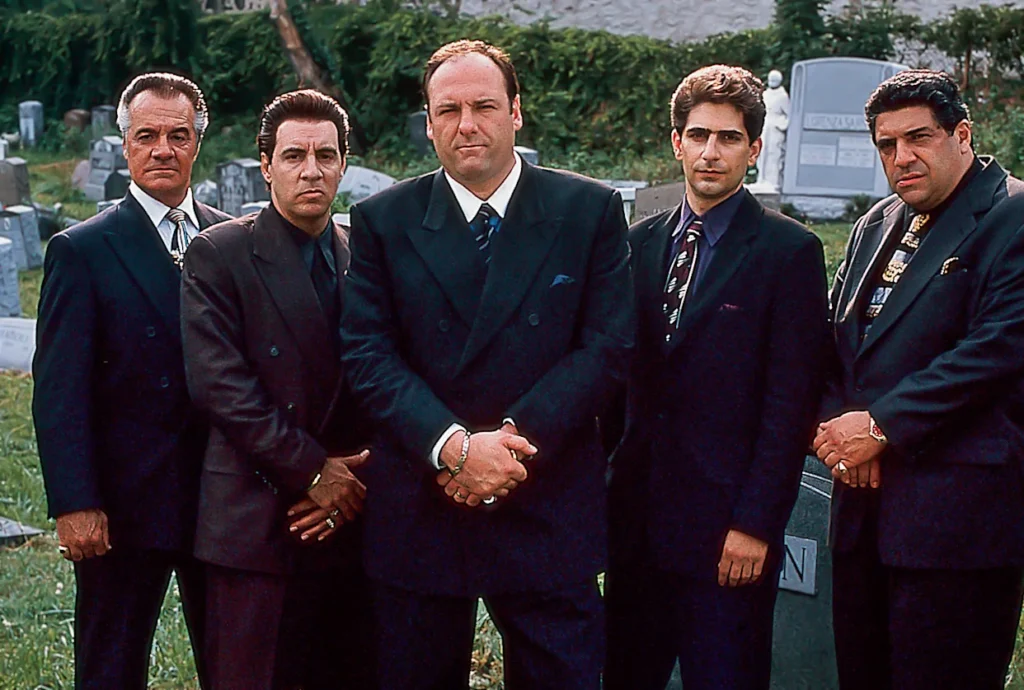
Meadow and AJ, representing the next generation, have their own musical identities that reflect their struggles with legacy, identity, and expectation. Meadow’s music often underscores her ambition and evolving worldview, while AJ’s tends to reveal confusion, anger, and insecurity. The generational contrast is made audible.
Christopher Moltisanti’s soundtrack is perhaps the most tragic. His aspirations as a writer and filmmaker, combined with his deepening addiction, create a soundscape full of longing and self-deception. Songs connected to Christopher often expose the gulf between who he wants to be and who he becomes. Through music, the series quietly communicates the deteriorating emotional states of its characters, making their experiences more vivid and intimate.
Iconic Musical Moments and Their Lasting Impact
Over the course of its six seasons, The Sopranos delivered dozens of musical moments that have become iconic in television history. These scenes linger in the collective memory not just because of their visual power but because of the profound emotional weight carried by the accompanying songs. Some of the most unforgettable moments in the series owe much of their impact to the music that frames them.
One of the earliest examples comes in the pilot episode, when the series introduces Tony driving through New Jersey to the pounding rhythms of Alabama 3’s “Woke Up This Morning.” This theme song immediately sets the tone: gritty, ironic, darkly humorous, and unmistakably tied to Tony’s identity. It frames the entire narrative as a journey—not just through physical space but through the chaotic emotional terrain of a man trying to reconcile who he is with who he wants to be.
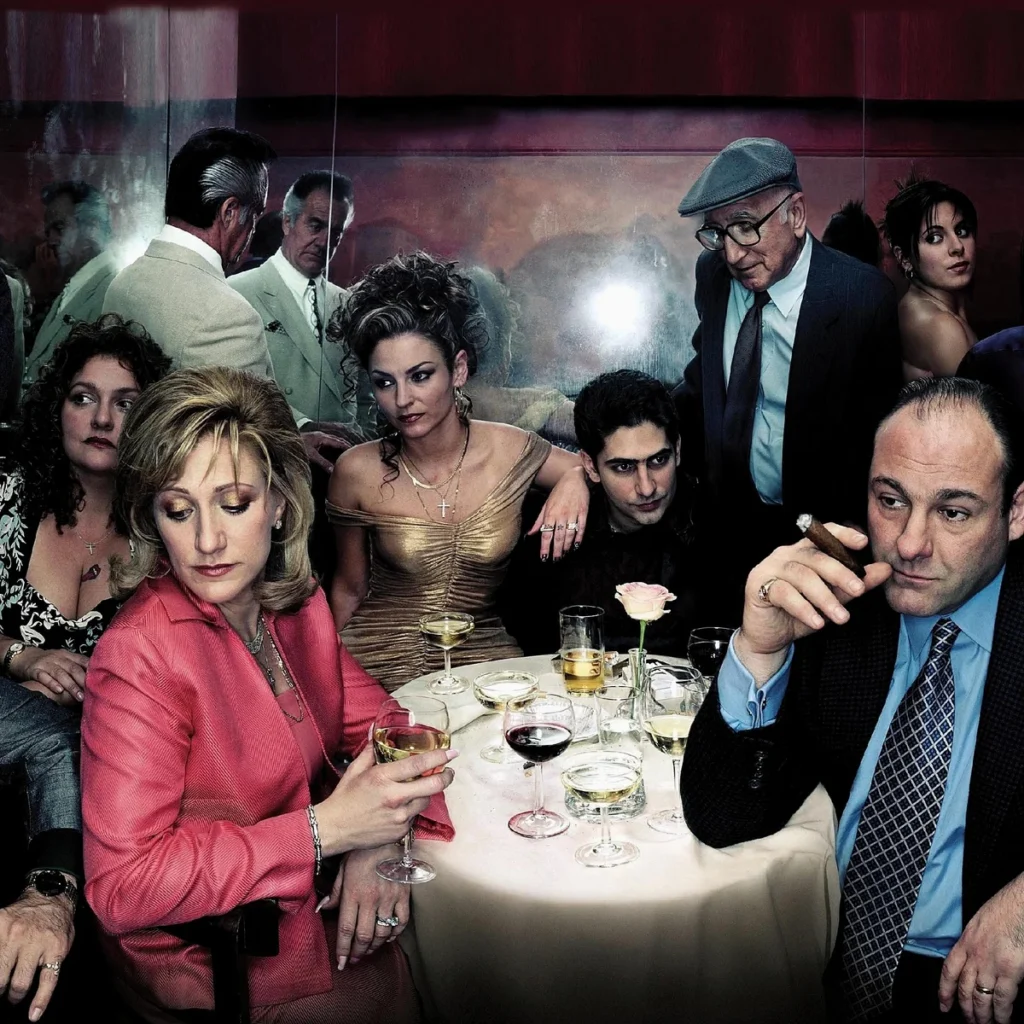
Another striking moment occurs in the episode “College,” when Tony kills Fabian Petrulio while the serene, almost angelic song “Con Te Partirò” plays. The juxtaposition highlights one of the show’s recurring themes: the contrast between Tony’s attempts at moral respectability and the violent reality of his life. The beauty of the music amplifies the brutality of the act rather than diminishing it.
Christopher’s death is accompanied by a chilling musical decision—not through a dramatic song, but through the absence of one until later. When Tony suffocates him, the scene is nearly silent, making it unbearably intimate. Only later does music re-enter the narrative, framing the emotional fallout and revealing Tony’s complicated mix of relief and sorrow.
Of course, no musical discussion of The Sopranos is complete without examining its controversial and masterful final scene. Journey’s “Don’t Stop Believin’” plays as Tony sits in Holsten’s diner with his family. The song choice was bold and unexpected, but incredibly precise. It represents hope, denial, nostalgia, and the possibility of danger all at once.
Conclusion
The emotional power of The Sopranos owes as much to its music as to its groundbreaking writing, acting, and direction. From the very first episode, the series established a soundtrack that functioned not simply as accompaniment but as a narrative force—one capable of revealing psychological truths, heightening dramatic tension, and reshaping the viewer’s emotional engagement. Music in the series acts as a thematic compass, guiding audiences through Tony Soprano’s fractured interior world and the complicated lives of those around him. It helps articulate the unspoken, illuminating desires, guilt, fears, and contradictions that define the show’s characters.
What sets the musical choices apart is their refusal to simplify emotions. Instead, songs often complicate scenes, introducing layers of irony or dissonance that mirror the complexity of the characters themselves. The show trusted its audience to absorb these nuances, using music not as an emotional crutch but as a sophisticated storytelling device. This approach allowed the series to explore the intersection of violence and normalcy, nostalgia and denial, ambition and despair—all without relying solely on dialogue.
Moreover, the soundtrack’s eclecticism played a crucial role in capturing the cultural texture of New Jersey, Italian American identity, and the generational divide within the Soprano family. Each character’s musical associations provide insight into their worldview, shaping scenes in ways that are intimate and revealing. Music becomes a silent narrator, commenting on the characters’ choices, foreshadowing their fates, and deepening the audience’s emotional connection.
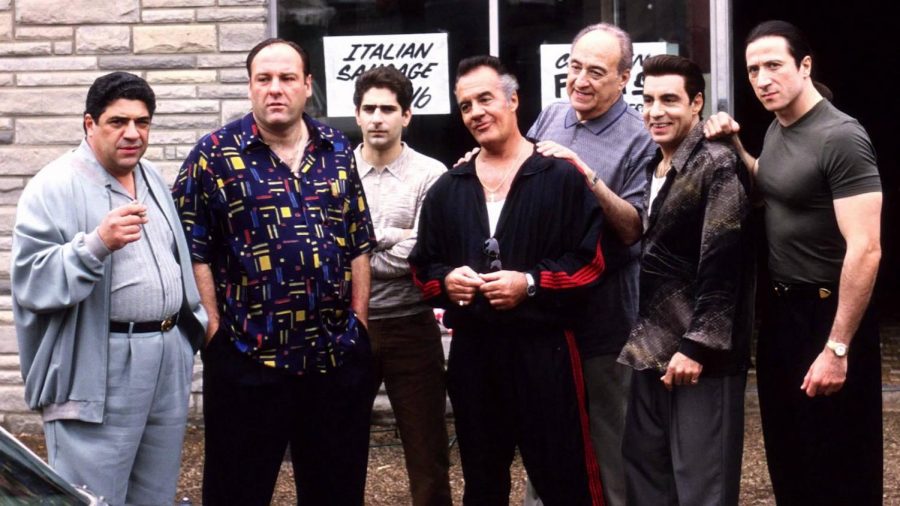
Iconic moments like the final diner scene demonstrate just how deeply music can imprint itself on a show’s legacy. The use of “Don’t Stop Believin’” in the finale transformed a familiar song into a symbol of uncertainty, dread, and contemplation. The ending has been endlessly analyzed, debated, and reinterpreted, but what remains undeniable is the song’s central role in shaping its emotional impact. Without it, the scene would not have achieved the same level of cultural resonance.
Ultimately, the music of The Sopranos serves as a testament to the series’ artistic ambition. It shows how a carefully curated soundtrack can transform television into something cinematic, enduring, and emotionally profound. Through its bold, deliberate, and often surprising musical choices, the show demonstrated that sound can shape storytelling as powerfully as image or dialogue. This fusion of narrative and musical expression is a major reason why The Sopranos continues to captivate audiences, long after its groundbreaking final cut to black.