Tag: Rajant

Exploring the Potential of Wireless Mining: Revolutionizing the Mining Industry

Introduction

The mining industry has always been at the forefront of technological advancements, constantly seeking innovative ways to improve efficiency, safety, and productivity. One such groundbreaking development that holds immense promise is wireless mining. By leveraging wireless communication and automation technologies, the mining sector is poised to undergo a remarkable transformation. In this article, we delve into the concept of wireless mining, its potential benefits, and the challenges it faces.

Understanding Wireless Mining

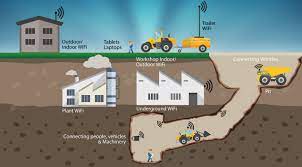
Wireless mining refers to the application of wireless communication networks, sensors, and automation technologies in mining operations. It enables real-time data collection, analysis, and control, eliminating the need for cumbersome wired connections. This advancement allows mining companies to optimize various processes, enhance safety, and improve overall productivity.

Benefits of Wireless Mining

Enhanced Safety: Traditional mining operations involve numerous risks, including cave-ins, toxic gas exposure, and accidents. Wireless mining empowers miners with real-time monitoring of critical parameters, such as gas levels, temperature, and structural integrity, ensuring timely intervention and reducing the potential for accidents.

Increased Efficiency: Wireless sensors placed strategically throughout the mine enable continuous monitoring of equipment performance, environmental conditions, and worker health. This data helps mining companies identify inefficiencies, streamline operations, and proactively address maintenance issues, resulting in optimized production and reduced downtime.

Remote Operations: Wireless mining enables remote operation and monitoring of equipment, eliminating the need for workers to be physically present in hazardous environments. Remote-controlled machinery can be operated from a safe location, minimizing risks and increasing operational flexibility.

Real-Time Analytics: With wireless connectivity, mining companies can collect and analyze real-time data from multiple sources, such as sensors, drones, and satellite imagery. Advanced analytics algorithms can provide valuable insights, enabling predictive maintenance, resource optimization, and informed decision-making.

Overcoming Challenges

Despite its significant potential, wireless mining also faces challenges that need to be addressed for widespread adoption:

Connectivity and Coverage: Mining operations often take place in remote areas with limited network infrastructure. Establishing robust and reliable wireless connectivity throughout the mine requires careful planning, investment in infrastructure, and deployment of repeaters or mesh networks.

Security: Protecting wireless networks from unauthorized access, data breaches, and cyber-attacks is crucial. Implementing robust encryption, authentication protocols, and cybersecurity measures is essential to ensure the integrity and confidentiality of mining data.

Interference and Signal Strength: Mines can be challenging environments with factors like dust, electromagnetic interference, and obstacles hindering wireless signal strength and reliability. Developing specialized wireless solutions that can operate effectively in such conditions is necessary.
One solution to overcome the challenges of signal strength and reliability in mining environments is the implementation of resilient mesh networks, which can provide robust wireless connectivity by leveraging multiple interconnected nodes.

Future Outlook

The future of wireless mining looks promising. As technology continues to advance, wireless communication networks will become more robust, reliable, and capable of handling the demanding conditions of mining operations. Furthermore, the integration of artificial intelligence (AI), machine learning, and the Internet of Things (IoT) will further enhance the capabilities of wireless mining, enabling autonomous mining operations and intelligent decision-making.

Conclusion

Wireless mining represents a paradigm shift in the mining industry, offering numerous benefits ranging from improved safety and efficiency to real-time analytics and remote operations. While challenges such as connectivity, security, and signal strength exist, ongoing advancements in technology are steadily addressing these issues. With continued innovation and collaboration between technology providers and mining companies, wireless mining has the potential to revolutionize the industry, paving the way for safer, more efficient, and sustainable mining operations.


The Pros and Cons of Using Mesh Networks for Smart Homes

Mesh networks are a type of networking architecture that can provide wireless connectivity to devices over a large area without relying on a central access point or router. Instead, each device in the network acts as a node, capable of transmitting and receiving data from other devices within the network. In this article, we will explore the benefits of mesh networks, their applications, and the technology behind them. 

Benefits of Mesh Networks

One of the primary benefits of mesh networks is their flexibility and scalability. Because each device in the network is capable of transmitting and receiving data, the network can easily expand to cover a larger area or accommodate more devices as needed. This makes mesh networks particularly useful in situations where traditional networking infrastructure may be difficult or costly to implement, such as in rural areas or large buildings. It is also used in industrial wifi.

Another benefit of mesh networks is their reliability. Because each device in the network is capable of relaying data to other devices, the network can continue to function even if one or more nodes fail or go offline. This makes mesh networks particularly useful in applications where a high degree of uptime is required, such as in emergency response situations or for critical infrastructure.

Applications of Mesh Networks

Mesh networks have a wide range of applications, from providing wireless connectivity in remote areas to enabling smart homes and cities. Some of the most common applications of mesh networks include:

Smart homes: Mesh networks can be used to connect smart home devices such as lights, thermostats, and security cameras, allowing them to communicate with each other and with the user.

Emergency response: Mesh networks can be deployed in emergency response situations to provide wireless communication between first responders and other critical infrastructure.

Rural connectivity: Mesh networks can provide wireless connectivity to remote or rural areas where traditional networking infrastructure may be difficult or costly to implement.

Public Wi-Fi: Mesh networks can be used to provide public Wi-Fi access in parks, public spaces, and other outdoor areas.

Industrial applications: Mesh networks can be used in industrial applications to provide wireless connectivity to sensors, monitoring equipment, and other devices.

Technology Behind Mesh Networks

The technology behind mesh networks involves a combination of hardware and software components. Each device in the network, or node, is equipped with a wireless radio that allows it to communicate with other nodes in the network. The nodes are also equipped with software that enables them to route data to other nodes in the network as needed.

One of the key challenges in designing a mesh network is ensuring that data is routed efficiently and reliably between nodes. To address this challenge, mesh networks typically use a routing protocol that allows nodes to determine the most efficient path for data to travel based on factors such as network congestion, signal strength, and distance.

Conclusion

Mesh networks are a flexible and scalable networking architecture that can provide wireless connectivity to devices over a large area without relying on a central access point or router. They offer a range of benefits, including reliability and flexibility, and have a wide range of applications in areas such as smart homes, emergency response, and rural connectivity. As the technology behind mesh networks continues to evolve, we can expect to see even more innovative applications and use cases in the future.

5 Things You Need To Know About Network Management Software

Network Management is often a subject filled with a lot of technical terms and jargon that the reader would find unhelpful. So, expressed in a more clarified way, a network is the connectivity of any device that can communicate with other devices, as well as the network that allows them to communicate. So any hardware or software from the smallest cable to the largest server is included in a network.
With this, Network Management Software (NMS) detects, restructures, monitors, updates, and troubleshoots network devices — both wired and wireless — in a standard business network. A system management control application then displays the performance data collected from each network component, allowing network engineers and IT technicians to make changes as deemed fit.

5 Things to know about Network Management Software:

They are dependent on your location and topology :
Your network management needs to have an accurate topology of your network because there are simply too many moving parts today to work without detailed documentation. This should also be updated every time new devices enter your network. One unaccounted-for device can introduce security vulnerabilities, which can’t be allowed.

Your budget and expenditure are important:
Your NMS is built to work with you, assess your current network and help you plan for your business growth. This is the best way to forecast your IT expenses, but it also helps you to maintain a healthy, current network infrastructure. Network maintenance software varies in price, and while running a business, saving cost is an obvious goal to be chased after. Your IT expenses will be low if you get a kinetic mesh network, because of its effectiveness.

Documentation and Planning go into it:
Your network management should be highly documented and recorded so that every decision and scenario has already been thought through thoroughly. This is the best way to plan to avoid mistakes in an emergency scenario and to handle any downtime or network performance issues.
It is also a helpful habit to be developed especially for really complex networks.


Network Automation:
Network automation seeks to level up responsiveness to known issues and reduce their cost. Network automation facilitates updating network device configurations and automatically provides reports on the automation status. It also involves the need for even more Automation to save time and energy.

External threats exist as well:
Due to harmful external agents, your network management software may be susceptible to threats that may affect its functionality and operation. A stable network can only detect threats like phishing and viruses, while the earlier they are detected. The easier it becomes to maneuver through danger, the better your business network is. Staying ahead of threats helps you have a fully functioning and secure network.

The need for Network maintenance software in modern-day business cannot be overestimated. Organizing and maintaining full control of all computers and digital screens attached to a business network helps in on-time notification and passage of information.

What is a Wi-Fi Mesh Network?

Having proper Wi-Fi coverage within your home can be a great idea, and it’s one of those things that can make a huge difference. Which is why it makes sense to create your own Wi-Fi Mesh Network. It allows you to bring in better coverage for your home while offering some incredible benefits and results every time.

What is the role of a Wi-Fi Mesh Network?

The idea here is that you have a group of multiple devices which are acting as a single Wi-Fi network. You have multiple Wi-Fi sources spread around your home. There’s the main router, and then you have other points spread all over your home to deliver the best possible coverage. The benefit is clear, you get to have much better coverage and no signal loss.

Yes, signal loss is an issue for a lot of people and it certainly has its fair share of benefits. It’s a very good idea to use Wi-Fi mesh networks because it delivers the efficiency and results you want, while also keeping the speed and quality consistent. That on its own is something you want to take into consideration as much as possible.

Wi-Fi Mesh Network benefits

The main benefit is that you can easily add new points to the Wi-Fi Mesh Network system. That means you can expand the coverage and still maintain very good quality for the entire Wi-Fi signal. Not only that, but you can always add new points to obtain improved coverage. Plus, the Wi-Fi Mesh Network also has self-healing features.

What that means is that if any point goes down, the communication is re-routed via another point. The network only goes down only when the primary point goes down, so that’s crucial to keep in mind here. Data can also take lots of different paths to the destination.

Is the Wi-Fi Mesh Network a great option?

Yes, it’s a very good way for you to have incredible internet quality throughout your home or office. Usually, if you’re far from the main point or router, you will experience signal loss and a lower speed. The Wi-Fi Mesh Network is designed to eliminate that problem. It still works extremely well, and it gives you the value and results you want. This is why it’s highly recommended to give the Wi-Fi Mesh Network a shot, and you will be very impressed with its flexibility, self-healing features, and consistent speeds!